
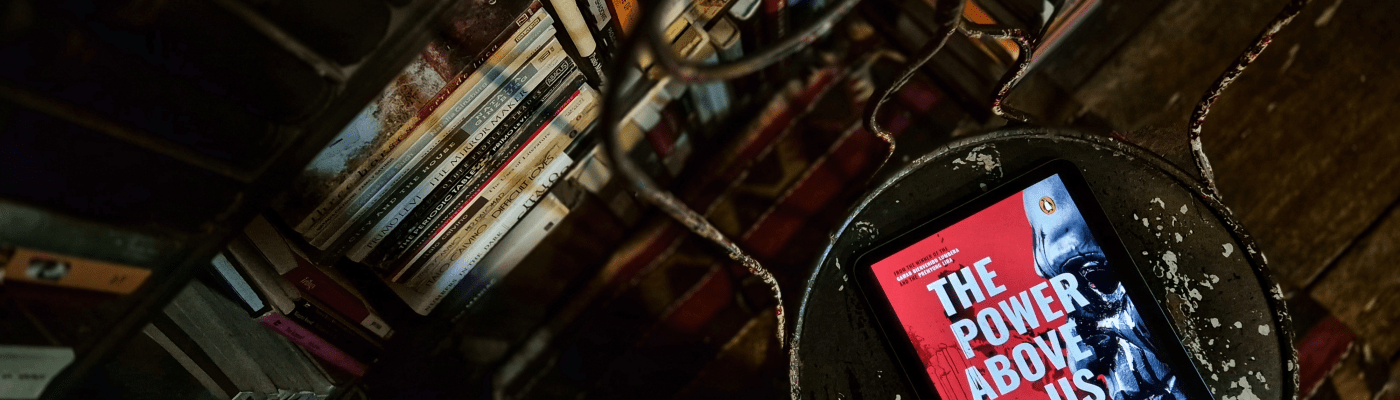
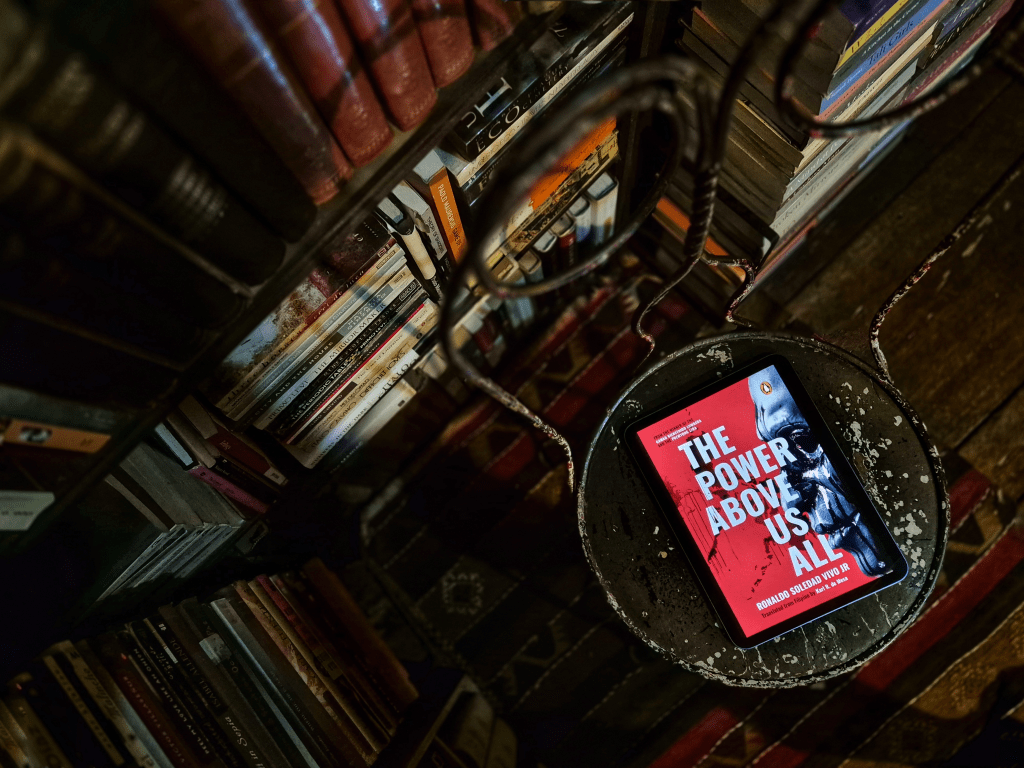
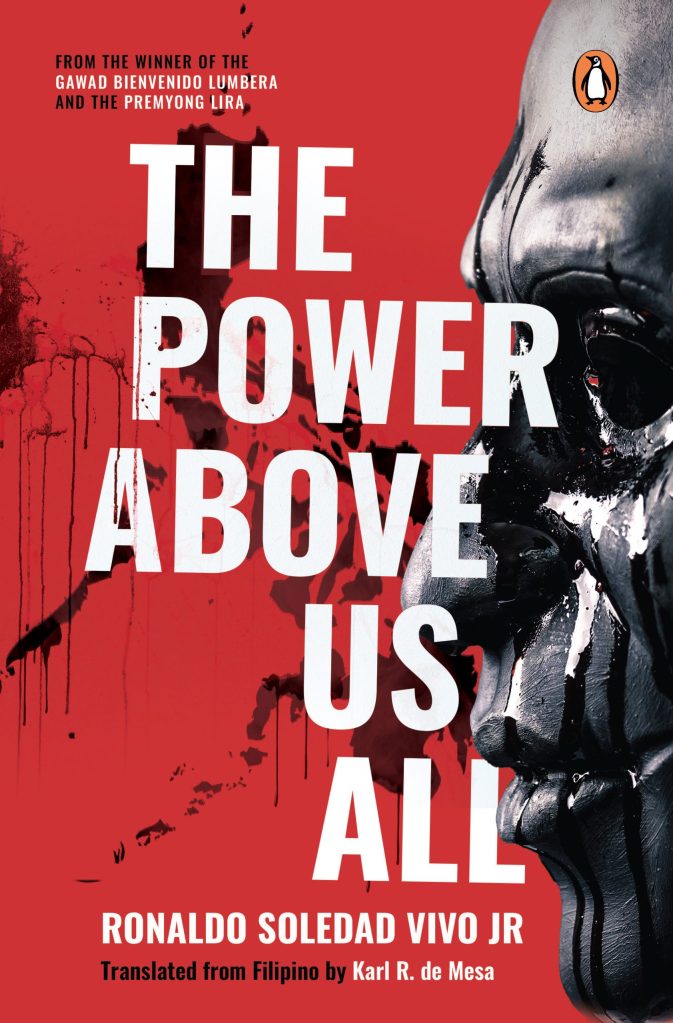
If author Ronaldo S. Vivo Jr.’s aim is to leave readers devastated, if the intention is to give us no respite from cruelty or from descriptions of material and moral filth, if the purpose is to shove this country’s reality in our faces when we would prefer to look away, then The Power Above Us All is a cataclysmic success.
The original Filipino novel Ang Kapangyarihang Higit sa Ating Lahat was published in 2015, the first of what became the Dreamland Trilogy. The Filipino original was a finalist in the Madrigal-Gonzales First Book Award, and has a 10-year anniversary reprint that was launched during the latest Manila International Book Fair. The second volume, Ang Bangin sa Ilalim ng Ating Mga Paa (The Abyss Beneath Our Feet), was a finalist in the National Book Awards in 2023. The third is entitled Ang Suklam sa Ating Naaagnas na Balat (The Loathe Within Our Rotting Flesh).
Vivo is also a recipient of the Gawad Bienvenido Lumbera for short fiction. The author’s background as a filmmaker and musician materializes through the textures and the rhythm of his writing. Through this recently released English edition, translated by Karl R. De Mesa and published by Penguin Books Southeast Asia, the work has become more accessible to international readers. Vivo’s other works are available through UngazPress, the independent publishing house that he and his pals put up.
Most of the novel takes place in Dreamland, a network of hovels in Metro Manila that, despite its name, is far from utopia. Deep into Dreamland’s labyrinths is the Inners where shanties are regularly razed by fire, violence is rife, and unexplained deaths are commonplace. It is where women sell their bodies to make ends meet, and where small-time thugs get the short end of the stick when their paths careen into police corruption and brutality.
It is into this suffocating world reeking of corpses and excrement that readers are thrust, and where we meet a cast of characters who are seemingly casually connected at first, but whose fates are eventually linked in a vicious web of violence: Dodong, a petty thief who is framed for the rape and murder of his girlfriend; Che, a bargirl; Buldan, Dodong’s best friend who meets a grim fate while trying to help Dodong; Elmer, the police officer who is revealed to be behind Che’s murder and assault; Butsok, the son of the mortician, who is a witness to Dreamland’s many mangled corpses and injustices; Mang Delfin, the mortician and abusive husband; and Starr, a prostitute whose identity is as tragic as her fate. Oh. And a serial killer at large, whose victims are gay men.
In this chaotic admixture of miserable players, it is sometimes difficult to distinguish between aggressor and victim. This leads to the chilling thought that in a world where injustice is empowered and left unchecked, a world where “everyday violence had numbed everyone into callous bastards,” corruption becomes a cycle, sexual depravity becomes a cycle, evil becomes a cycle, until it swallows everyone into its maelstrom.
It is difficult to read this without flinching, gasping, and feeling sick to the core. It is especially disturbing for a woman reader to notice that it is the females who suffer the worst fates. While some bumps in the narration left this reader perplexed (e.g. the question of whether it is advisable in the 21st Century to refer to Japanese nationals as “chinky eyes” or “slant-eyed”), the first part of the book had several awkward translations that rather impaired the flow of the narrative for this reader. The remaining three sections, however, captured the suspense and the savagery of the original language, ultimately carrying the narration to a gut-wrenching climax.
There is no denying the potency of this work. Perhaps it is only to be expected that this is the kind of literature to come out of a Manila still coming to terms with the consequences of the past two elections.
[The writer received an ARC of The Power Above Us All. Text and images by Miracle Romano and Penguin Random House SEA.
~ ~ ~ ABOUT THE REVIEWER ~ ~ ~
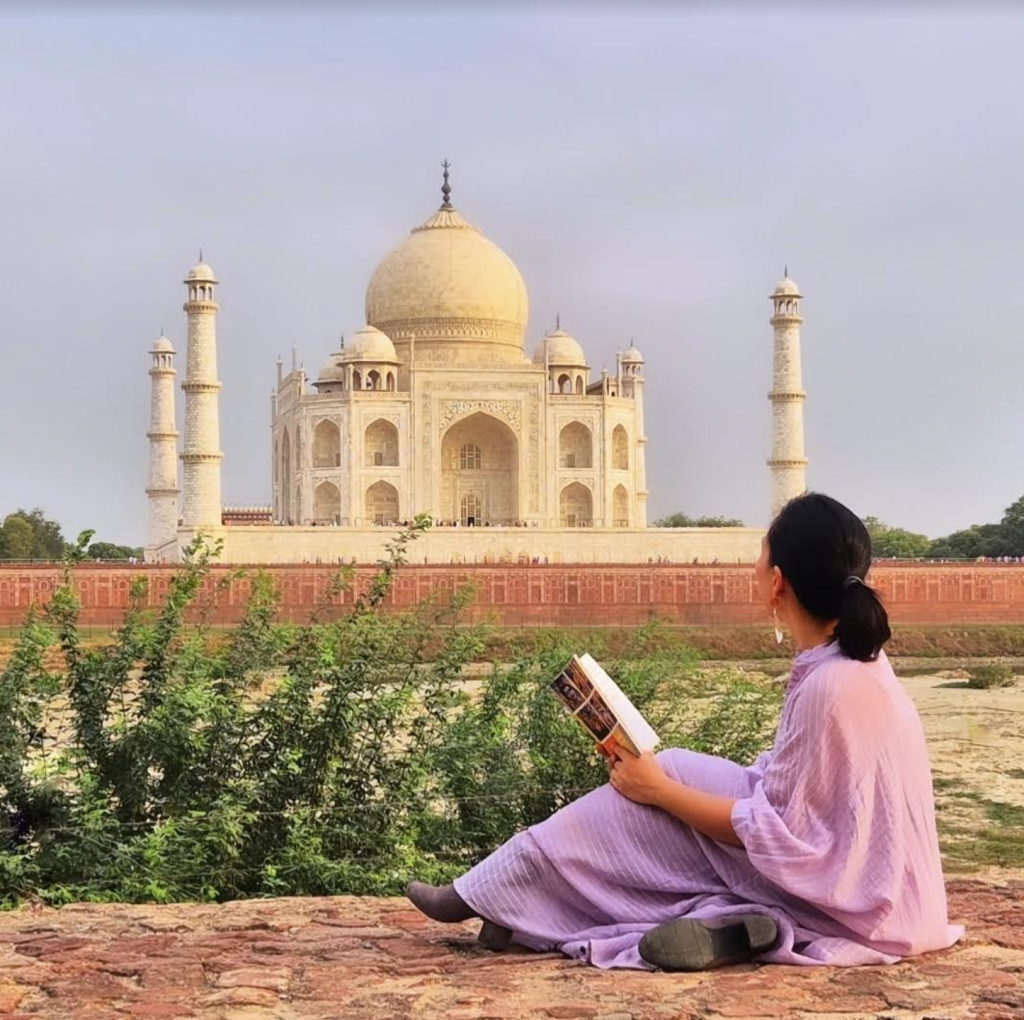
Miracle Romano is a book-butterfly who flies off to places influenced by her literary choices and reads books influenced by her travels. She is a pianist, a music teacher, and a former columnist for the Mindanao Observer who juggles her time between two passions — words and music. More of her writing can be found here.
 Ex Libris Philippines
[…] Full review at Ex Libris Philippines […]
LikeLike