

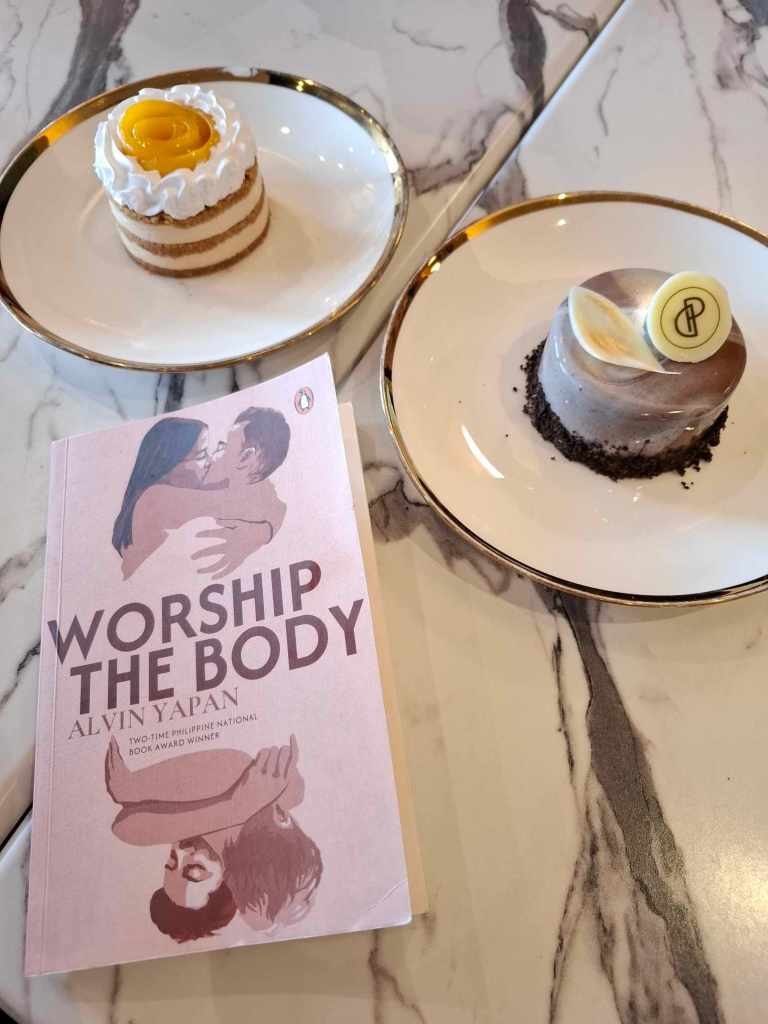
To read the English translation of filmmaker and Ateneo college professor Alvin Yapan’s book Worship the Body (Sambahin Ang Katawan) is to be awash in a sea of images. Of clothing revealing nakedness (between man and wife, and man and fellow man). Of sea and sky, lands urban and rural.
While acclaim and praise follow him, Yapan is no stranger to controversy (his 2016 film Oro is known not only for shedding light on the 2014 Caramoan Massacre, but also for the actual killing of a dog which parallels the killing of the four miners.) Yapan, then, is an Artist fully committed in the service of his vision. However, the question for readers of the book is whether this vision is one that rings true for them as well, or whether it is an overly optimistic hope for a polyamorous harmony that bucks traditional Filipino/Asian social mores.
Forget love triangles. Yapan’s novel features a love square, or a diamond-shaped quartet, if you’re feeling poetic. And it’s hard not to, when the writing is indeed lovely, the prose lilting and musical even when (especially when) Yapan describes depressed areas, or transactional acts of lust that put them above mere animal crudity. It must be said that the late Randy M. Bustamante’s translation was done so well, that if I had not known from the start that this was a translated work, it would have passed as a book in the original language. It is hard to imagine that much has been lost in translation, when so much of the symphony of images and sound was so tenderly present in the English edition.
Two men (Jaime and Jun) are wed to two different women (Ria and Maya). But overwhelmingly, the focus is on the relationship between Jaime and Jun, who fell in lust at a single glance.
And while more conservative readers may think that there is a tendency in the book to romanticize homosexual longing (the central love affair initially starts as a quick exchange of looks, a prelude to a commercial exchange of flesh for cash), the book is still an education in the protocols of a relationship unrecognized by Church nor State; a liberation of sorts, but with its own set of challenges. For how can one’s desire for exclusive loyalty be fully satisfied, if there is no outside power that recognizes and supports the union?
While romantics might think it heroic to risk it all for an all-consuming love, this is the book that will tether them to the earth, detailing the everyday battles to hide one’s true self, the inevitable wounds inflicted on our nearest and dearest.
In Yapan’s book, it is the wives who end up as the cuckolds. These two unlucky ladies, in turn, have a relationship of their own that, to this reader, seemed a bit contrived and forced… Less a choosing of a special someone, and more of a convenient body to seek comfort from.
Perhaps the book will have greater appeal to a certain reader longing for gay representation in Filipino contemporary literature. Truthfully, this reader found it difficult to relate to any of the four adult characters. While loneliness and the desire to be held is universal, Yapan’s book seems to be a justification of a selfish kind of love, one that focuses on fulfilling sexual desire first and foremost, leaving cares like marital fidelity and (my gosh) the rearing of children in the background.
And in the end, this seeming glamorization of pleasure, no matter how beautifully wrought, is what I felt strongly against.
But perhaps this is the point. When it’s us-against-the-world, when we worship the lover’s body above all else… even God and State, and Offspring… there is a price. Are we ready to pay it?
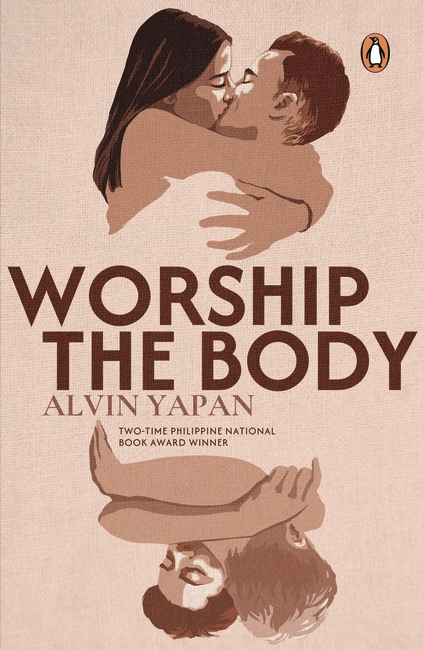
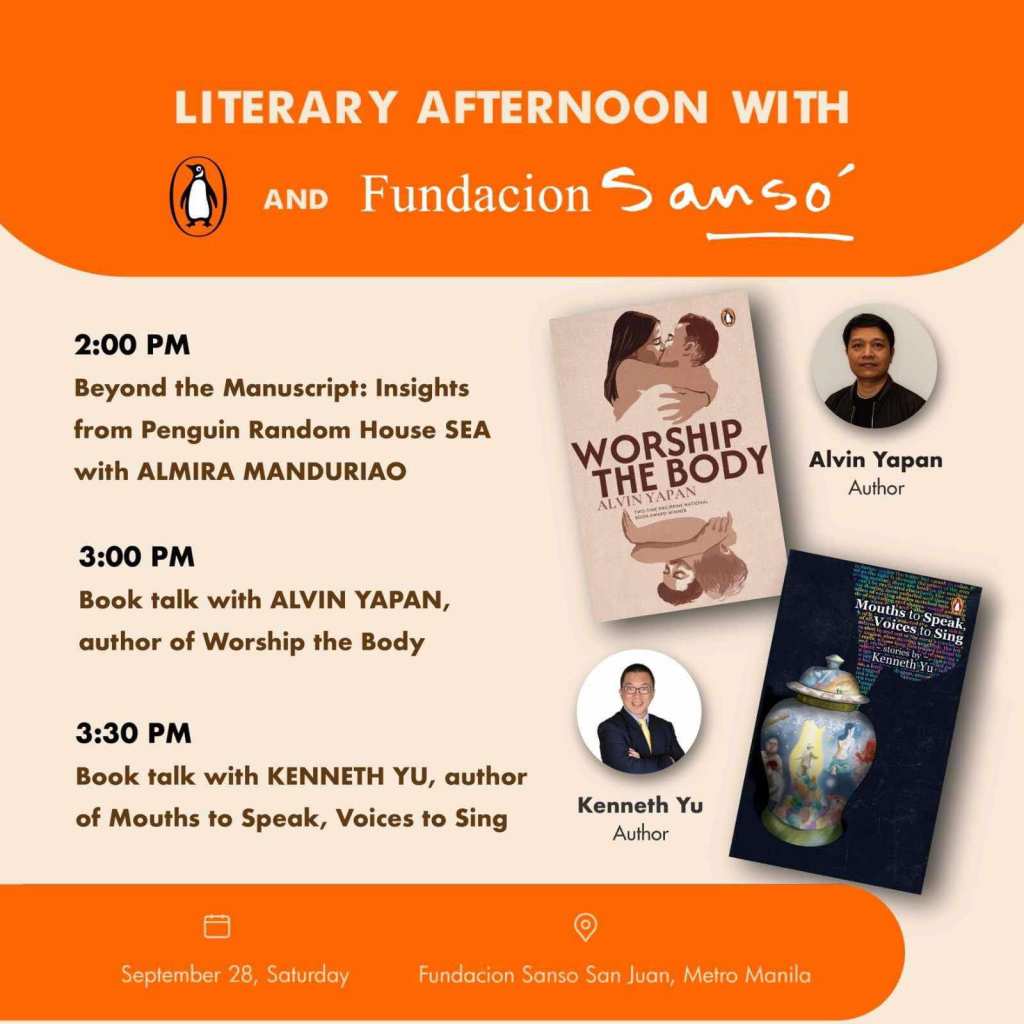
[The writer received an ARC of Worship the Body. It is readily available for P750.00 from Fully Booked. The author, Alvin Yapan, will be speaking about his book on Saturday afternoon, Sept. 28, 2024, at Fundacion Sanso. ]
ABOUT THE REVIEWER:
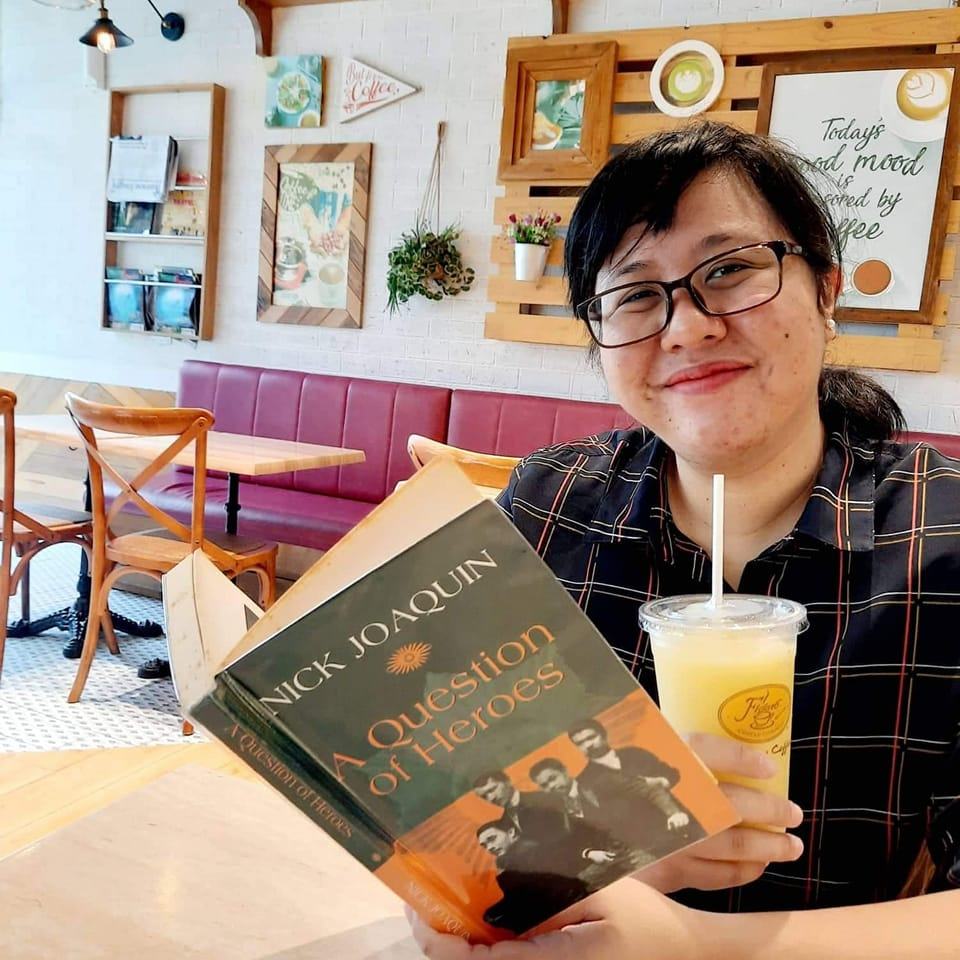
Gabi Francisco is a classically trained soprano who now performs in the English / Music / Drama classroom. On weekends she soaks in as much art and literature as she can, so she can pass her love for the arts on to her students. She passionately believes in the transformative role of arts education in nation-building. (IG: teacher.gabi.reads )
 Ex Libris Philippines