

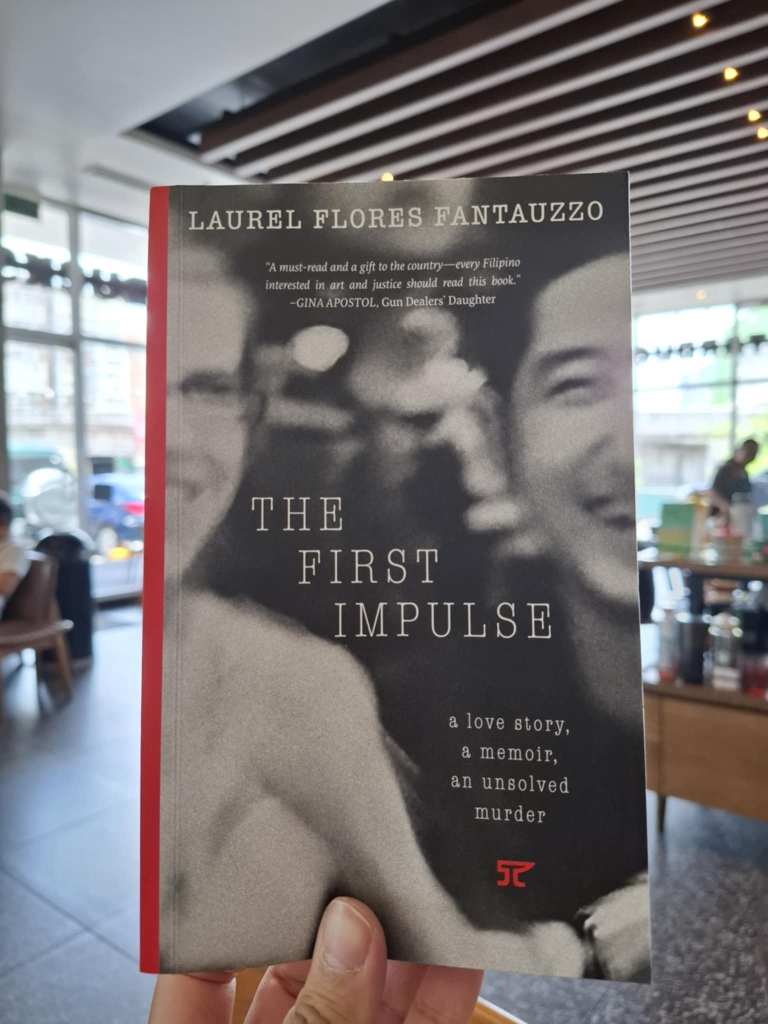
Author Laurel Flores Fantauzzo describes this book as the product of a haunting. The 2009 murders of film journalists Alexis Tioseco and Nika Bohinc moved her so deeply that she spent the next six years (eight with revisions) writing about the couple. What was originally meant as an academic thesis became a finalist in the 2018 National Book Awards. With only one of three perpetrators sentenced in 2018, Fantauzzo and Anvil Publishing have now released the second edition of what proved to be an utterly gripping read.

(Photo borrowed from In Memoriam – Alexis Tioseco & Nika Bohinc)
A lesser author could have made this a run-of-the-mill true crime book, sensationalizing the murder and how the Filipino justice system reacted to it. But to this reader’s grateful surprise, Fantauzzo’s book turned out to be quite different. It is a literary tribute to brilliant lives cut short, that focuses on the legacy of love they left behind, rather than merely the judicial torment that followed.
It is a polyphonic book told in page-turning prose, with some chapters told in the author’s point of view, then switching to Alexis’ and Nika’s, as well as their nearest and dearest. In the book launch, Fantauzzo said that the book she had in mind while writing this was Thornton Wilder’s The Bridge of San Luis Rey. Both books indeed resurrect the people behind the tragedy, making them live again in the minds of its readers.
While at times this reader found herself distracted by what seemed to be a non-stop pointing out of cultural quirks and negative asides by the author (and I was also somewhat unnerved by her description of a dream where Alexis visited her), these episodes are thankfully brief and balanced out by Fantauzzo’s recognition of the good in the Philippines: the warmth of its people.
The book is at its best in the reconstruction of the moral battles that defined Alexis Tioseco’s life. While Nika’s challenges are written about as well, it is Alexis’ trials that stand out for their audacity and idealism. For one so young, he dared so much. Tioseco called out the questionable practices of the Metro Manila Film Festival in 2004 (as they gave a huge percentage for commercial viability rather than artistic quality). He also debated with Carlo J. Caparas about the National Artist Award in 2009, on whether the mark of a national artist is one’s appeal to the masses, or the quality of one’s art. Tioseco’s work (along with many others) helped bring about the eventual creation of the Philippine Film Archive.
“The First Impulse” is an inspiring portrait of the best of youthful idealism, when intelligence is merged with patriotism and the courage to stand by one’s convictions, even when inconvenient or perilous.
The title of the book comes from a letter Alexis wrote Nika: “The first impulse of any good film critic… must be of love.”
And this love that Alexis had for the Philippines (despite its cruel imperfections captured in heartbreaking detail) is what shines in this self-described book of literary journalism.
Alexis’ deep love for independent Philippine cinema, especially, comes through. The moving book has touched this reader deeply enough for me to consider sitting through a 9-10 hour long Lav Diaz film.
Yes, this book is about two agonizingly tragic deaths. Yes, it too is about the frustrating bureaucracy and culturally systematized corruption amongst our countrymen, no matter what branch and level of government.
But above all, the book is about life and love, and the importance of art. And with this second edition, the ideals that Alexis and Nika fought for will live on in the memories of its readers.
~ ~ ~ ~ ~ ~
[The reviewer purchased “The First Impulse” from National Bookstore for P395. It is also available on Lazada.]
ABOUT THE REVIEWER:
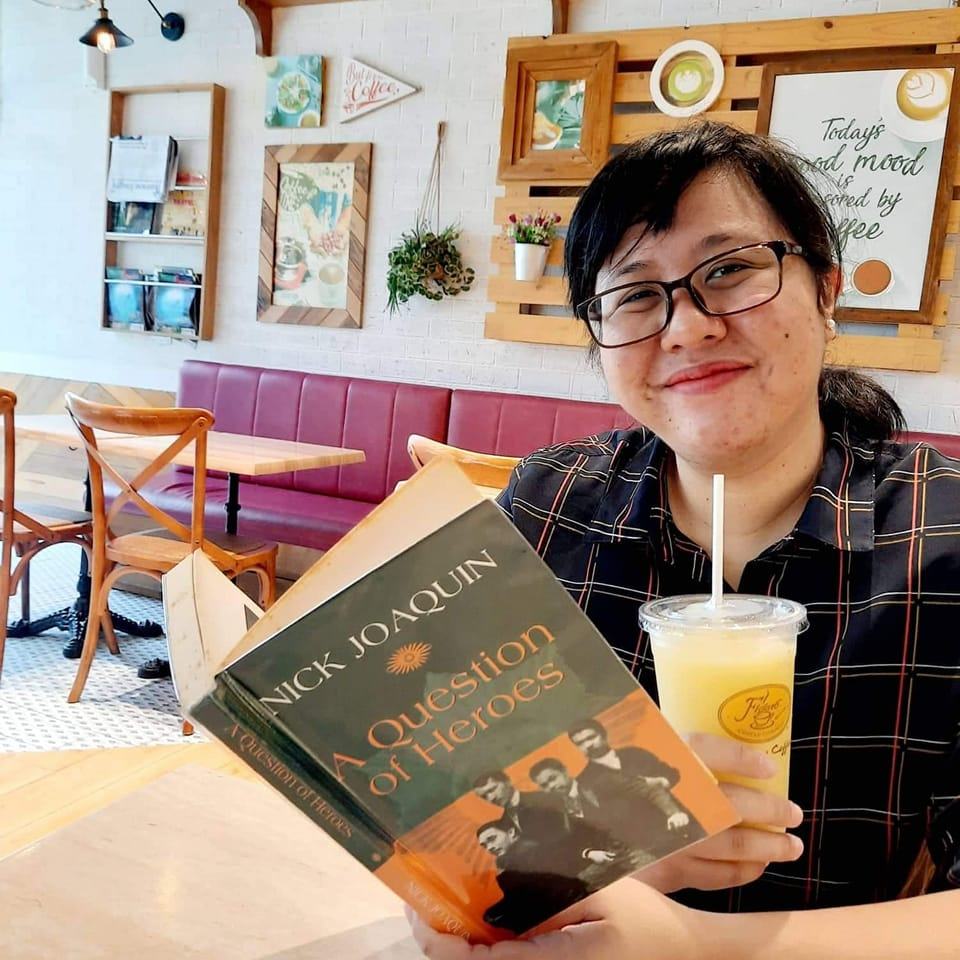
Gabi Francisco is a classically trained soprano who now performs in the English / Music / Drama classroom. On weekends she soaks in as much art and literature as she can, so she can pass her love for the arts on to her students. She passionately believes in the transformative role of arts education in nation-building. (IG: teacher.gabi.reads )
 Ex Libris Philippines