


“The status quo did not mean peace.”
Glenn Diaz’s 2022 novel about a middle-aged teacher fleeing her violent past has been picked up by Tilted Axis Press, as well as shortlisted for the Novel Prize in 2020.
It is many things: a literary crime novel, a concise history of Philippine contemporary history from the time of Ramon Macapagal until the present, the struggle for personal identity and agency versus the demands of family and society, the consequences of political activism … this is one of those books that demand to be reread, and I suspect, with different themes coming to light each time.
It is many things, but not easy reading. (Though, thankfully, still within the reach of lay readers like this reviewer) Let me explain why.
In the very best of novels (this one included), personal narratives combine with the country’s tale, imbuing both with greater clarity and meaning. What Diaz also does in Yñiga is to force his reader to take on the mentality of a novelist. It’s not only his chapters that jump backward and forward in time, but sometimes, even his paragraphs (and in one memorable, brief portion, his omniscient narrator becomes a cat). The reader-as-novelist has quite a bit of filling in to do. One needs to read deeply in order to follow the narrative thread, woven mainly through the eyes of a very troubled woman, no longer young, yet lost in a fight that has no end, forever seeking vengeance for her father’s disappearance.
Diaz asks the question, after anger-fueled action, what next? One suspects the answer is forgiveness merged with accountability, one rooted in justice for past crimes, in the understanding and recognition that it takes a whole country (not a strongman Messiah) to fix our woes. We forgive not to forget (how can we), but to shoulder on with the generations-long task of nation-building. “Who said the fight ended with EDSA?”
Yñiga can also be read as a form of protest, a novel documenting the plight of the families whose beloved have disappeared, an investigation into the unrest that drives men and women into the forests and mountains. And this incredible achievement is wrought with such a fine pen. Diaz’s prose drips with finesse, rendering the sights, sounds and smells of urban and rural Philippines so accurately.
Diaz also trusts that the reader is familiar with contemporary Filipino history. By writing in English (with the odd Filipino word and poem here and there), this reviewer is grateful for how our story of national struggle will be brought to an international audience.
Perhaps the novel is a call to action. In the end, Diaz’s novel reminds us that no matter our “little life of little consequence, we are not alone… An invisible forest around her.” And no matter the impersonal visits of Death and Despair who call on all, one shouldn’t lose sight of the forest for the trees of personal tragedy. “The error was going at it alone.” For, as Diaz writes, if “our despairs formed a tapestry, a forest,” then so do our intertwined hopes and dreams for a truly peaceful Philippines.
~ ~ ~
The reader purchased Glenn Diaz’s book Yñiga from the Ateneo University Press for P355. It is available through Lazada.
~ ~ ~
ABOUT THE REVIEWER:
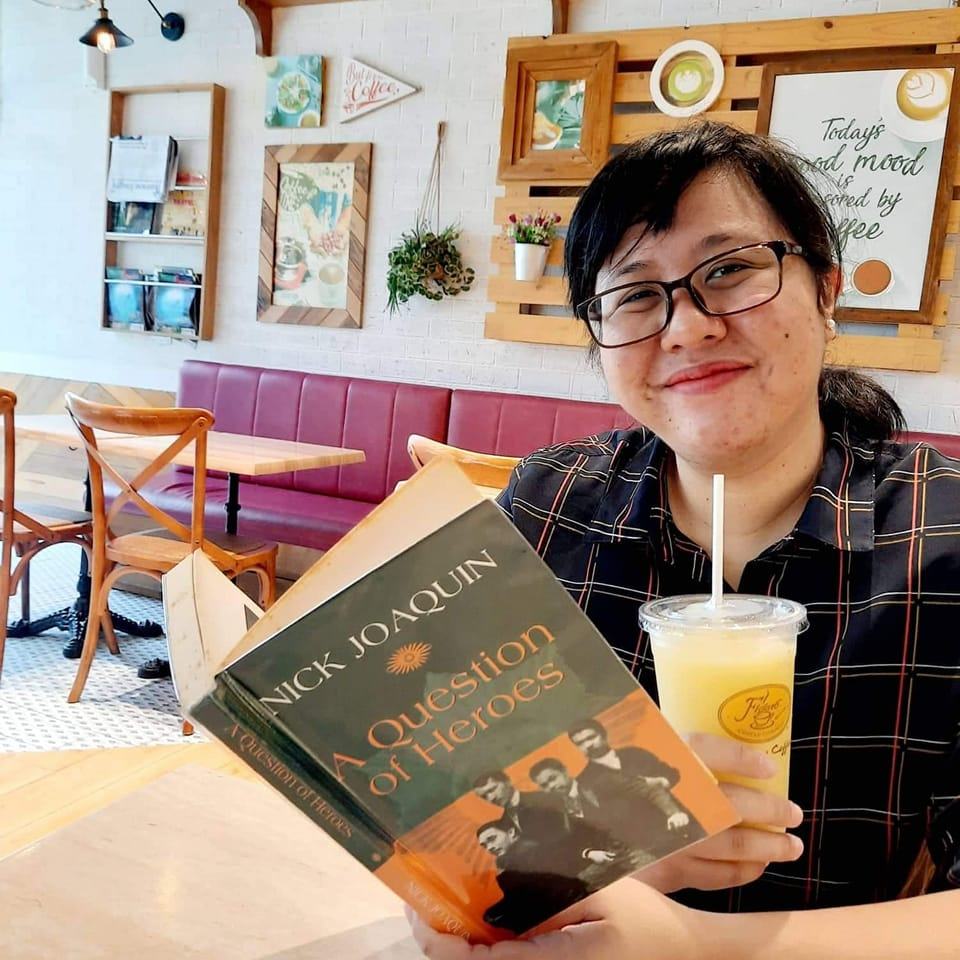
Gabi Francisco is a classically trained soprano who now performs in the English / Music / Drama classroom. On weekends she soaks in as much art and literature as she can, so she can pass her love for the arts on to her students. She passionately believes in the transformative role of arts education in nation-building. (IG: teacher.gabi.reads )
 Ex Libris Philippines