
“Ah, but we wanted to change the world, really, foolhardidly tried to make it better… but you left, and are returned to us, barbaric and helpless in your turn.”
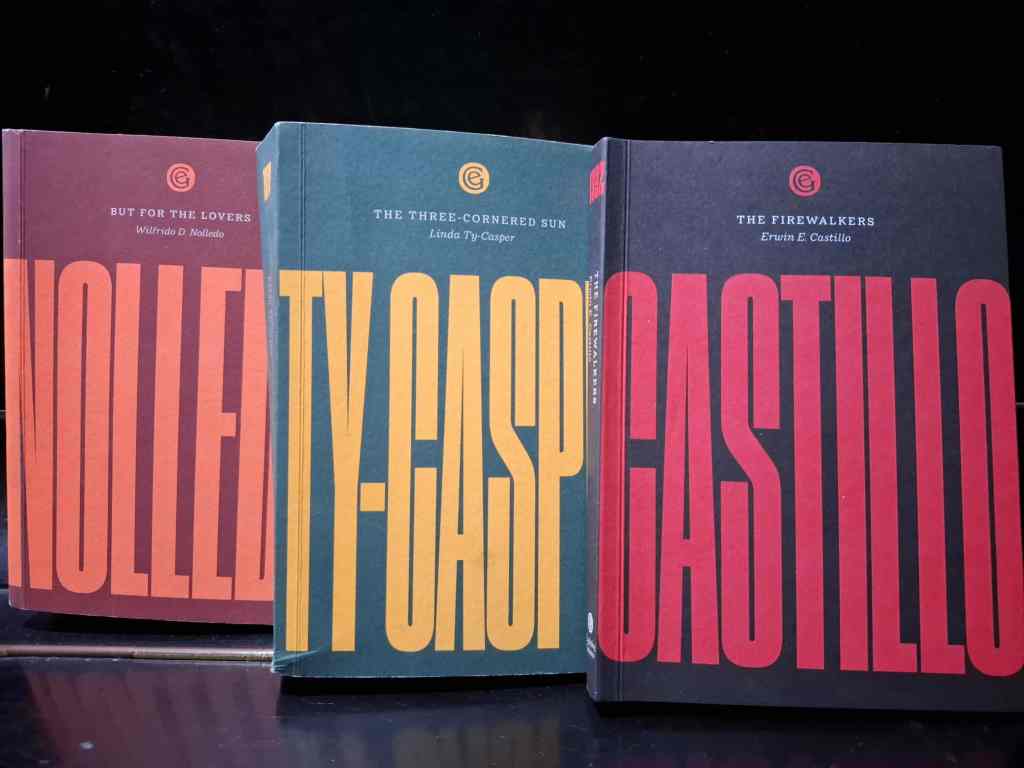
Exploding Galaxies’ third publication may be their slimmest yet, but perhaps “The Firewalkers” by Erwin E. Castillo is the most impactful. Compared to its more hefty siblings (written by Wilfrido Nolledo and Linda Ty-Casper, in chronological order of publication), the slim 166 pages contain both a novella (The Firewalkers) and an accompanying story (The Watch of La Diane). The two tales could arguably be considered as just one long narrative with a time jump of a few centuries. My reading experience of the dual offerings seemed like a compressed fever-dream, more intense for its brevity, yet still almost overwhelming in scope as Castillo evokes scenes from prehispanic times up to the 1970’s. And all of it written in the most delightful prose that reads like poetry in the grand manner of Nick Joaquin or Francisco Balagtas.
It starts with a mystery: children begin vanishing from a town in Cavite in 1913, that twilight era when Filipinos were divided into those who would rather die than surrender to the next foreign invader, and those who have been lured by the dollar to ferret out their own former comrades.
What makes this investigation far from ordinary is that the monsters are everywhere, and everyone. From Americans shooting innocent civilians and claiming that they resisted, to fellow Filipinos turning on each other, Castillo evokes the barbarity of a fallen world, whose descent cannot be blamed on colonization alone.
History and myth collide as the cast of characters live, love, kill and be killed on the page. The very name of The Firewalkers’ protagonist, Gabriel Diego, conjures up the Ilocano heroine Gabriela Silang and her husband, Diego. Amalgamations of heroes and villains who truly lived lend this narrative the weight of Truth.
Castillo’s pen sings, his verse-like sentences conjuring the scent of burnt human fat dripping on cooked potatoes; evoking the spectacle of a time when the Americans sought to bring us Filipinos to heel, benevolence yet to come and violence dispersed in the name of controlling rebellion. This is no romantic traipsing through memory, but a bloody resurrection of things nearly forgotten: of aging heroes reduced to petty bureaucrats doing the American’s dirty work, disguised as public service; of the slow moral decay of the greedy generation that emerged after heroes, and “the conflagration they sparked but could not in the end command.” Reading this book, it doesn’t take much of a leap to trace a direct lineage to today’s corrupt officials and their wanton, thieving contractors. The theme of elevated countryman feeding on fellow Filipinos’ back-breaking labor for petty, selfish gain is a refrain Castillo sang, echoes of which are heard still.
“The Sasquatch, called the Bendigo, feeds on the human soul, and then assumes the form of its victim.”
This book interrogates what men do in the name of the children and the mothers who birth them. There is a monster in us like the wendigo, Castillo shows, that can justify monstrous deeds in wartime and also in peace, yet all this does is turn Filipinos into carnivorous metaphorical beasts that end up preying on the very innocents they would protect.
The writer muses if this is part of our long folk tradition of blood sacrifice (for every building’s foundation, some vermillion must be shed), and asks: Must we lay new victims on the altar of nationhood, for each new generation?
The end of the book is a dream-like episode of an adulterous Filipino couple (as they pretend to be anything other than Filipino) while travelling in the United States sometime in the Seventies. Their odyssey seems to portray that mix of conflict and chaos within, the echoes of an unfinished revolution reverberating, manifesting as a quest for national and personal identity. Such is each Filipino’s destiny to work out, in fear and trembling.
In short, this is a great English book. And that a Filipino author wrote it lends poignancy to our continued quest for meaning, both as a nation, and in the most sacred spaces within.
“And for a while the future was so near I could feel it almost within our reach… but the beast – that survived the arrow, the crucifix, and will survive your electric lamp – arrives again to mock us. And it may be the tragic fact that your time, like ours, demands always one more sacrifice, needs a monster – a beast to call him there.”
[The Firewalkers is available from Exploding Galaxies for P580.00. Copies are also available on Lazada, as well as Fully Booked and National Bookstore.]
ABOUT THE REVIEWER:
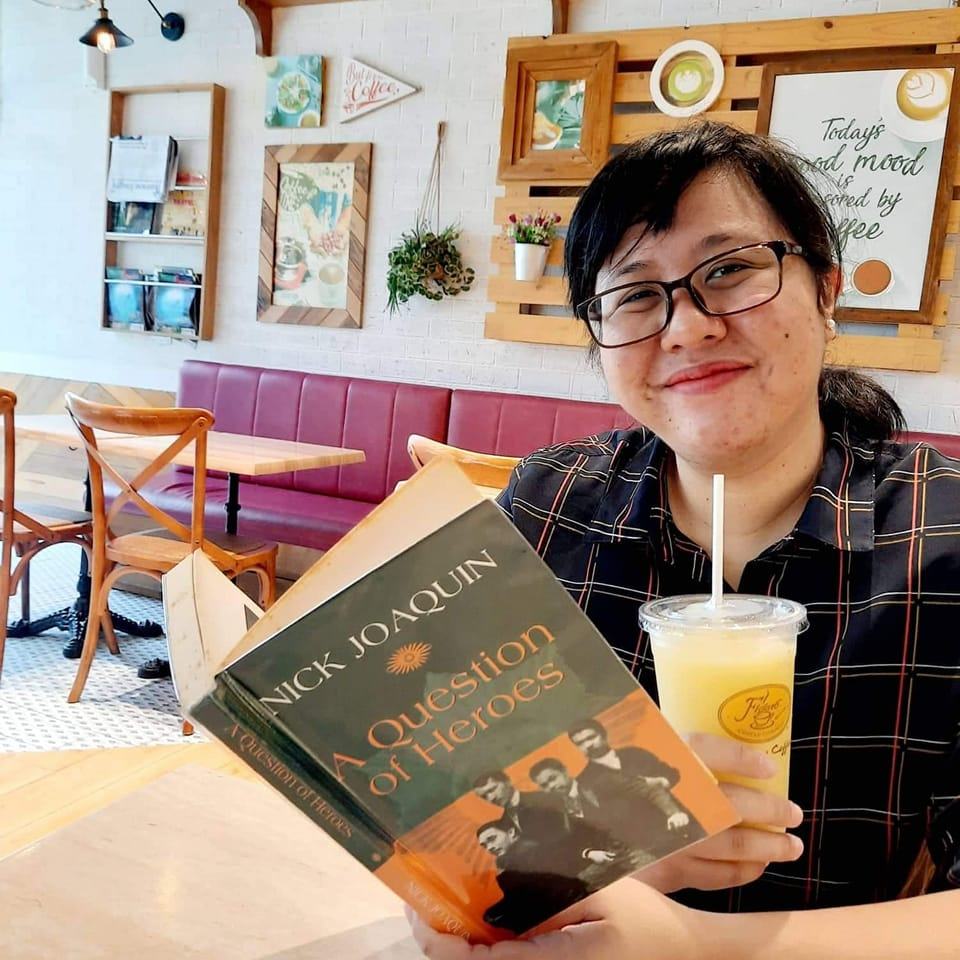
Gabi Francisco is a classically trained soprano who now performs in the English / Music / Drama classroom. On weekends she soaks in as much art and literature as she can, so she can pass her love for the arts on to her students. She passionately believes in the transformative role of arts education in nation-building. (IG: teacher.gabi.reads )
 Ex Libris Philippines