

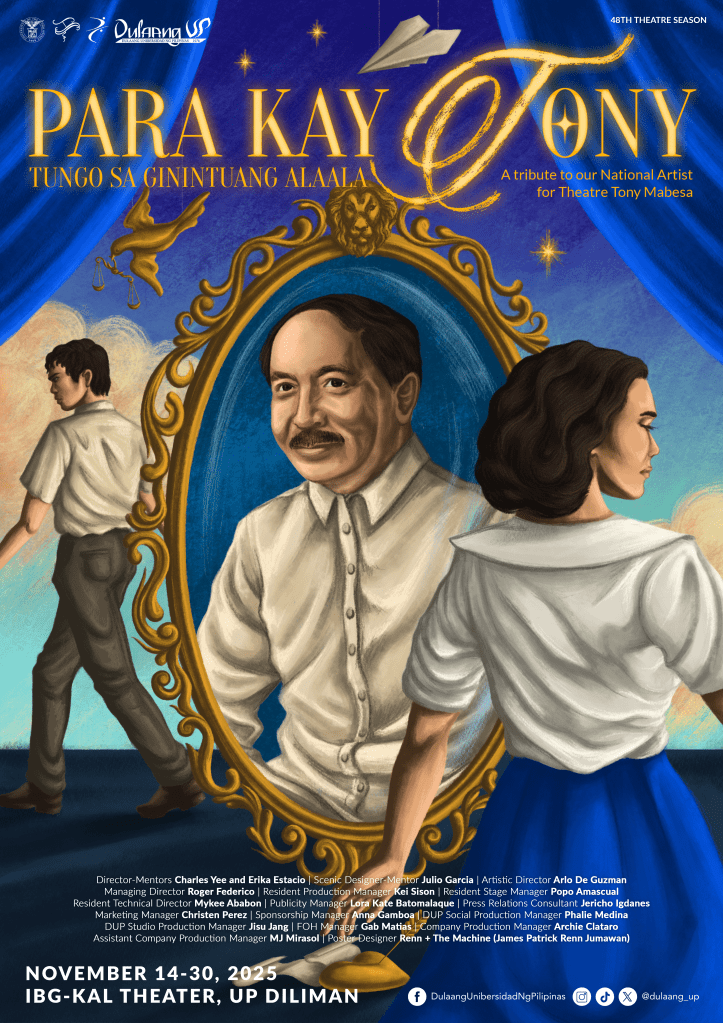
(Photo credits: Dulaang UP)
Dulaang UP’s twin bill of Wilfrido Ma. Guerrero’s Kalahating Oras sa Kumbento and Rolando Tinio’s May Katwiran ang Katwiran in Para Kay Tony is a sparse, student-led production that attempts to go beyond an act of remembrance, into the claiming of identity.
A Legacy of 48 Years
While DUP is not the only theatre group in the University of the Philippines (UP) Diliman, it is the one most closely associated with the pioneering theatre arts program (the first in the country) that has so deeply impacted the country’s professional landscape, with its alumni peppering the Gawad Buhay awardees for excellence on any given year.
DUP has been searching for the way forward after being doubly hit by the pandemic and the 2019 demise of its director father figure, Tony Mabesa (one of three directors from the generation of growling geniuses who trained student-artists in UP, along with Behn Cervantes (†) and Anton Juan). DUP’s post-pandemic shows in their new IBG-KAL theatre have been a record of this reflection.
This twin bill has a smaller cast and much more minimalistic staging compared to previous productions. With a regular ticket price of P1,000.00, there may be mixed reactions to their declaration of “looking back at their humble beginnings.”
Para Kay Tony also fully embraces its student-led identity, without the big name veteran actors and directors from past shows. Their 48th season opener has embraced the classic approach: no lapels, only hanging mics from the ceiling (above a theatre-in-the-round circular stage) to aid a generation of students used to communicating through Zoom and a ready microphone.
The true start of the play, it can be argued, is when the audience enters the hall twenty minutes or so before curtain. There is a video recording, with alumni (a Who’s Who of the local theatre scene) recounting their favorite memories of the dearly departed Tony Mabesa, which also reminds the student-artists: From greatness of spirit they come. For this greatness, they aspire. And this is not greatness of ego, but the greatness of offering up the best fruits of the art, of one’s self for countryman and nation.
With these two plays focusing on power imbalances between authority figures and those being lorded over, DUP continues its tradition of presenting socially relevant classics, as interpreted through theatre students’ eyes.
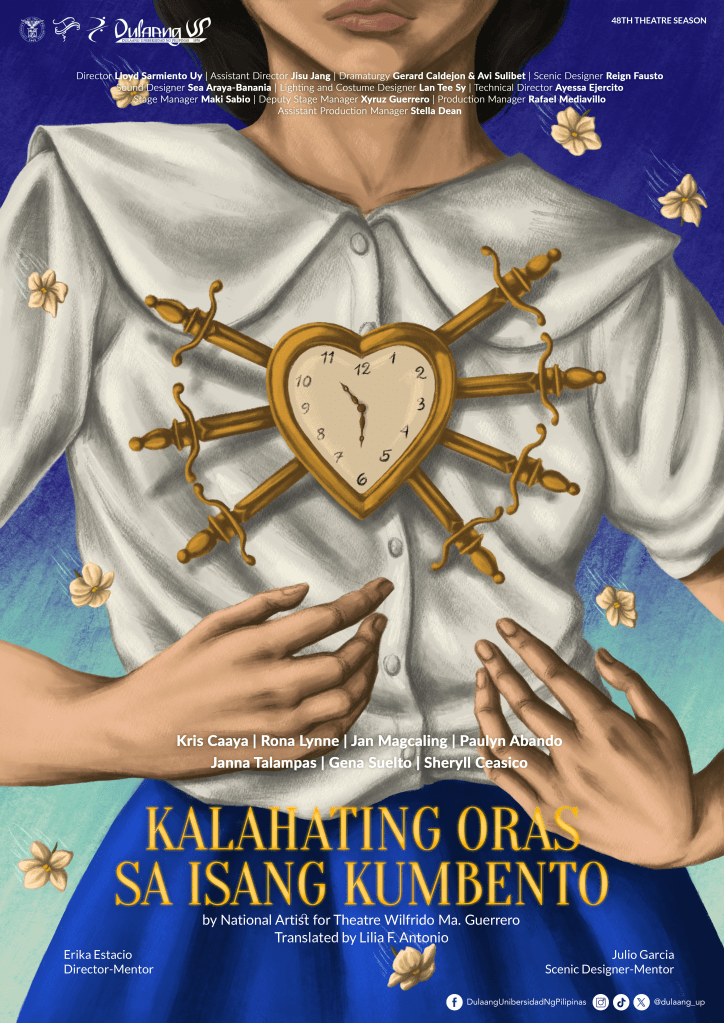
Righteousness Over Kindness
Kalahating Oras sa Isang Kumbento (translated into Filipino by Lila F. Antonio from Wilfrido Ma. Guerrero’s original English script, Half An Hour in A Convent) is a peek into a pupil/principal conference gone wrong. The struggle of students versus authority figures hits close to home, with the Filipino translation highlighting the emotional weight of the text more clearly. The 1937 play’s perennial theme comes out despite the datedness of the script’s specifics. Rona Lynne as the female student Yolanda gains our sympathy after receiving verbal and physical abuse. Her crimes? She spoke and wrote letters to a male house boy.
In a milieu when more attention is being given to students’ mental health, the tragedy (directed by Lloyd Sarmiento Uy) is a stark reminder of the consequences of the conservative older generation imposing its standards of morality unto the more liberal youth.
While competent performances were given by the three nuns (Paulyn Abando, Gena Suelto, and Sheryll Ceasico), Rona Lynne’s depiction of despair was the most moving, especially in the scene where she threw dignity to the wind and begged on all fours for the right to remain in the school.
And yes, it did take exactly half an hour to perform.
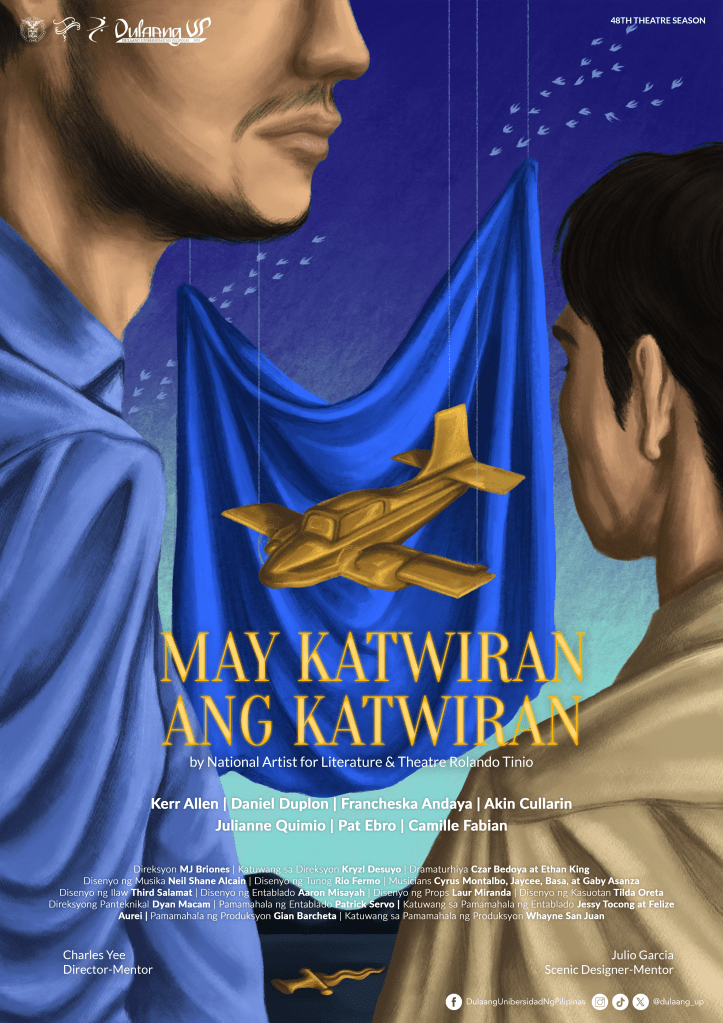
Brechtian Playfulness
May Katwiran ang Katwiran by Rolando Tinio was written in 1981 as a Brechtian play, highlighting class differences between the abusive Senyor and his victim, Kasama.
Before the second play started, two “emcees” (Francheska Andaya and Akin Cullarin) came out to set audience expectations. I thought it was clever how, without ever name-dropping Brecht, they told the audience to weigh and measure what they saw using sharpness of intellect, and not to be swayed by emotional manipulation.
The reviewer couldn’t help but compare this play to the previous DUP one in the same style (2024’s Nanay Bangis), and this Tinio play emerges as the more successful show, with Message ringing triumphantly above Brechtian devices such as breaking up the narrative into several acts, actors laughing at what their co-actors are doing, all in order to prevent total emotional immersion.
In student-director MJ Briones’ hands (with Charles Yee as Mentor-Director), what emerged was pointed satire, yet also a highly entertaining romp through the travails of a spoiled man-child (Kerr Allen) as he forces an indentured farmer (Daniel Duplon) to be his bodyguard/manservant. Senyor undergoes many challenges as he crosses a mountain to escape the consequences of murder.
“Mas madaling pumatay ng tao kesa mag-ayos ng gulo,” Senyor laughingly states, confident in the untouchability that his wealth buys him. In a time when public sentiment against nepo babies runs hot, the play is a reminder of the systemic abuses of the ruling class against the very people they claim to represent. It also shows the complicity of the 99% in its meek acceptance of the perceived superiority of the 1%.
A Step in the Right Direction
The discipline and preparedness of the students was evident from how the ushers and production team stood with military-like precision in their assigned spots, to the exact synchronization of lights and sound effects in what was the open TDR turned press preview.
While not as grand as previous productions either in terms of artistic or production value, its honesty and sincerity make it a promising start to the season, with an offering its late mentor would not be ashamed to be associated with.
~ ~ ~
[The reviewer was invited to the press preview of Dulaang UP‘s Para Kay Tony. Tickets are available for P1,000.00 (regular price). They run until November 30, 2025, with shows at 10:00 AM, 2:30 PM, and 7:30 PM at the IBG-KAL Theater in U.P. Diliman, Quezon City.]
ABOUT THE REVIEWER:
Gabi Francisco is a classically trained soprano who now performs in the English / Music / Drama classroom. On weekends she soaks in as much art and literature as she can, so she can pass her love for the arts on to her students. She passionately believes in the transformative role of arts education in nation-building. (IG: teacher.gabi.reads )
 Ex Libris Philippines