
“We overestimate our capacity to remember even as we underestimate our capacity to forget… if erasure is the default mode of engagement with the past, then we must become active agents of the labor of remembrance.”
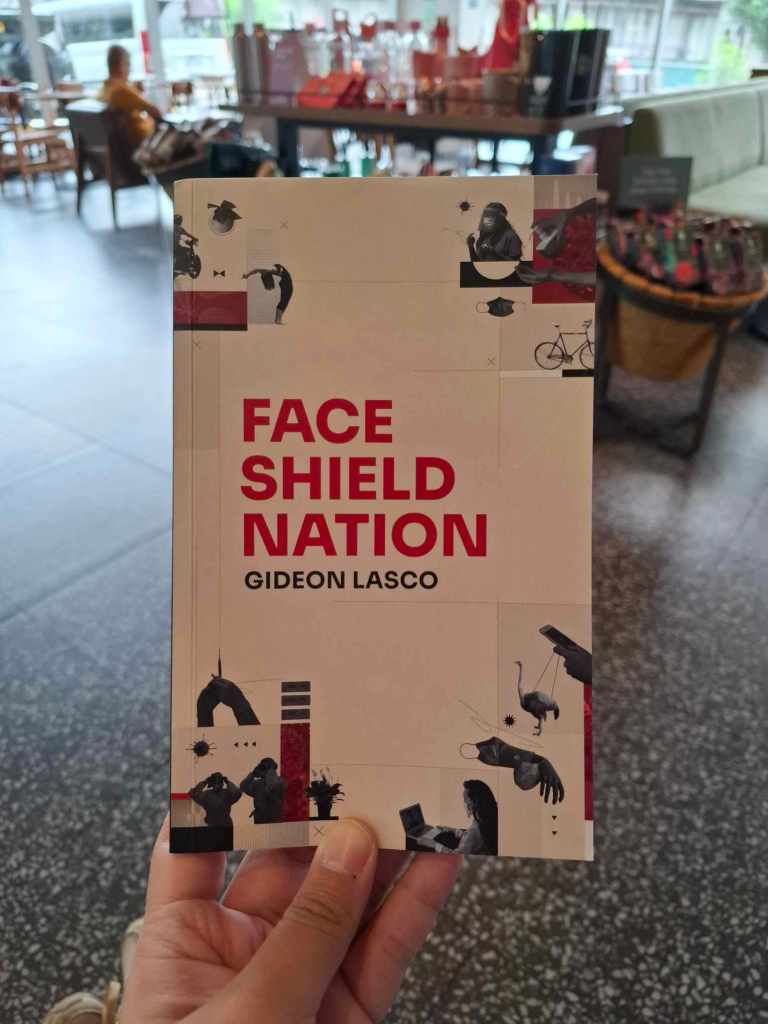
Gideon Lasco’s most recent book is a clear-eyed collection of essays that were written during the pandemic, a compilation of articles written as reactions to contemporary events. His is a unique and valuable perspective; as a Filipino physician/anthropologist, he had the opportunity to travel to many other countries while most of us remained home-bound due to quarantines with ever-changing letter combinations. Mixing memoir with medical expertise worth recounting, he was able to compare the Philippine pandemic response with what other countries were doing (Mexico, Thailand, Singapore, India, to mention a few), and write an objective yet ever optimistic book in the process.
The book is probably not one this reviewer would have read, if his previous one hadn’t been tremendously impactful for this reader. Having suffered tremendous personal loss (like most survivors) during the dark years of 2020-2023, the pandemic has all become one dark blur, too painful to process, too recent for remembrance.
Or so I thought. I’m grateful to report that this book proved me wrong.
Lasco continues to write with that rare blend of honesty and optimism that I first noticed in “The Philippines Is Not a Small Country” (which won the 2022 National Book Award). I remember tearing up quite a lot from that slim volume, in grateful awe that this book could elicit such a well of national pride.
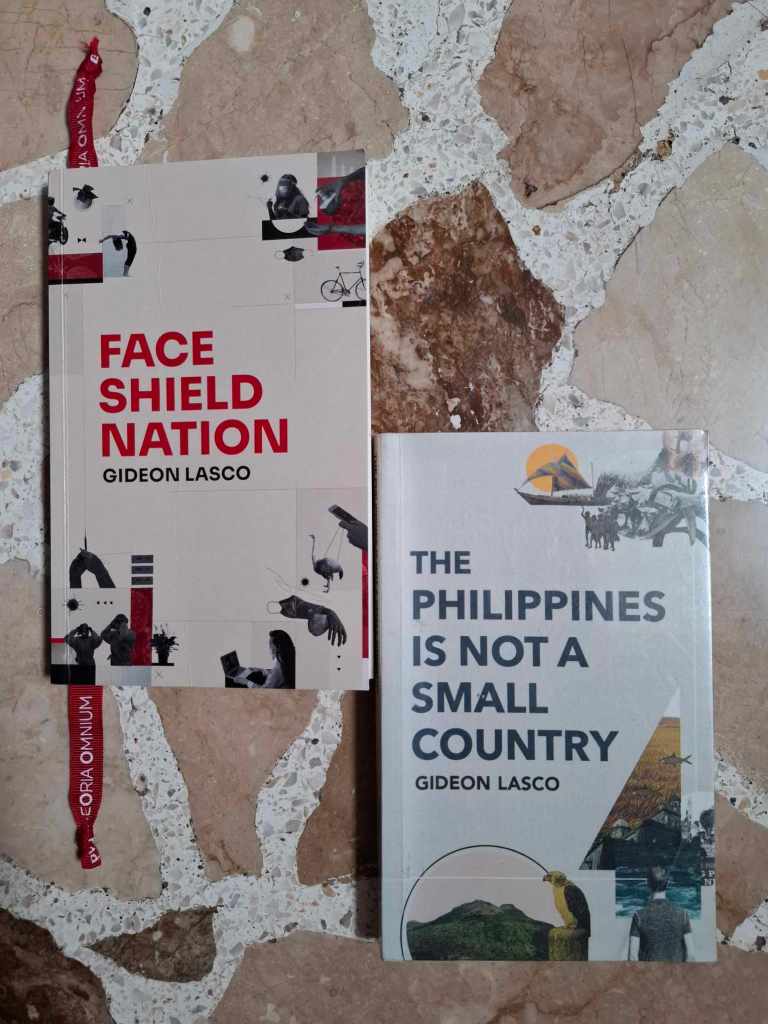
“Face Shield Nation” is a more critical book, as Lasco details the government’s response, as well as the antics of the authorities as politics and the abuse of power mixed with public health policy. He also calls out the prejudices of the citizenry, as well as anti-vaxxers and members of an evangelical church that refused to wear masks. And yet, Lasco balances the censure with well-reasoned alternatives, never condemning for criticism’s sake alone, but always pointing out a better path.
Divided into four sections (Bearing Witness, Life Under Lockdown, (Un)critical Responses, and The Pandemic Elsewhere), what amazes this reader is how Lasco’s words are never strident, never despairing. The pandemic has made cynics and toilet paper hoarders out of so many, but it seems this author is the exception.
Living through the lockdown, one day’s doom scrolling seemingly blended into the next. The value of Lasco’s book is that he managed to highlight the most important events of those blurry pandemic years. Reading about these historical milestones now, Lasco has helped this reader weave meaning out of national and personal tragedy, and even see the glimpses of light that some of us failed to notice because we were too busy just surviving through the dark.
Lest others mistakenly think that Lasco whitewashes history, we must note that the anger and frustration is there, simmering beneath the well-constructed sentences. Lasco does not bellow; instead, he blends bravery with literary detachment. Perhaps this is him already at his angriest: “I see the emperor in my own country, naked in cowardice and shame, drunk with privilege and power, declaring that he’s doing an excellent job while watching his country burn.”
This reader hopes that Lasco’s book inspires others to write similar, easily accessible books. For, as Lasco writes, “we have a duty to “bear witness” to the pandemic and its aftermath, interrogating its political constructions and social, economic, and cultural consequences.”
He also says, “Surely, we who lived must tell the tale.”
In telling his, he helps us make sense of ours.
~ ~ ~ ~ ~
The reader purchased Gideon Lasco’s “Face Shield Nation: A Chronicle of COVID-19 in the Philippines” for P425. It is available at the Ateneo de Manila University Press’ website and Lazada page.
~ ~ ~
ABOUT THE REVIEWER:
Gabi Francisco is a classically trained soprano who now performs in the English / Music / Drama classroom. On weekends she soaks in as much art and literature as she can, so she can pass her love for the arts on to her students. She passionately believes in the transformative role of arts education in nation-building. (IG: teacher.gabi.reads )
 Ex Libris Philippines