
“This too is a kind of law… not their rigid codes carved in stone, but the fluid law of power that shapes all things like water wearing away rock. You are what every rajah must be – friend and strategist, brother and player of the great game.”
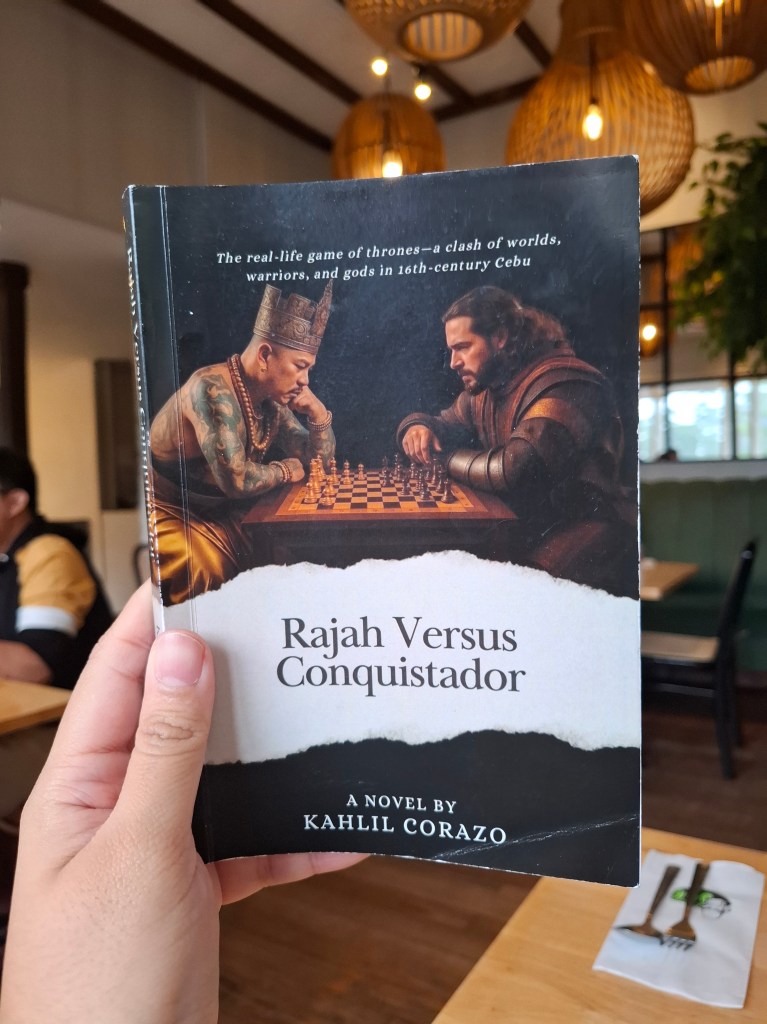
Rajah Versus Conquistador by Kahlil Corazo is that rare thing: a literary fiction novel that not only retells a historical truth, but reframes it entirely, while being thoroughly entertaining. What Hilary Mantel has done for Thomas Cromwell, Corazo has done for Humabon, elevating him from turncoat historical footnote into a cunning and complex ruler, the mightiest in an alliance of kingdoms whose world collided with the new one brought over by Ferdinand Magellan’s ships.
Most Filipinos (this Manila-based reviewer included) remember Humabon merely as the first Filipino ruler who converted to the colonial religion. His legacy is overshadowed by that of Lapu-lapu, who fought the conquering Spanish troops led by their Portuguese leader, and killed Magellan on the bloodstained sands of Mactan. Corazo’s book explains why this is so, and truly brings the reader directly into a time when gongs reverberated on the shores of Sugbu, and the clash of cultures when the Christ-child and his peaceful teachings were first introduced into a culture accustomed to spilling human blood as sacrifices.
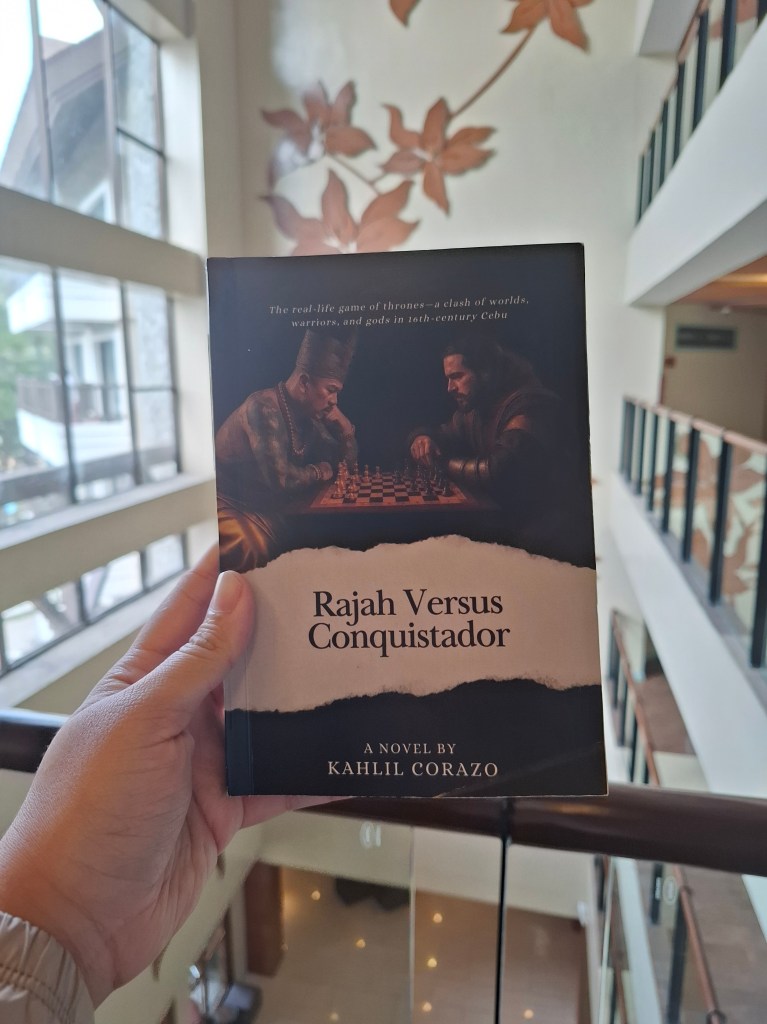
While Corazo has written other books, this is his first novel, although you’d never know it. The tone is assured, the words ringing with the weight of historical research and profound understanding of the psyche of a leader. We all know what happened, but Corazo manages to wring out why.
Corazo’s Humabon is awe-inspiring, a man of his time and yet able to transcend it, one who seeks a better world and isn’t afraid to do what it takes to achieve it. It is a testament to the author’s skill that the reader is fully sold into the many contradictions of Humabon’s nature; a sensitive soul who can befriend a conquistador and weep at his death, yet cold-blooded and politically adept enough to ensure that, no matter the outcome of the battle, he and his people will benefit. It is a fascinating psychological portrait, imbuing Humabon with the paradoxical nature of an Odysseus or an Agamemnon. Such men’s natures are too large to be contained by the trappings of mere labels like “hero” or “villain.” And such a man is worthy of the epic novel that Corazo has written, a book that deserves to win awards and can proudly stand beside the best historical fiction written in the English language.
Reading this book not only brings us into the very mind of Humabon (the author cleverly uses the second person), but also gives a framework with which to view Philippine history from 1521 onwards: as a power struggle not only between influential men, but also their women, who are powerful in their own ways either as baylan (also known as babaylan) or binukot. A power struggle whose echoes still reverberate today.
As Corazo put it, “These intertwined traditions… represent the hidden history of the Philippines – a history that continues to unfold in every political crisis, every social movement, every negotiation between tradition and modernity. In this continuous dance of influence and authority, the past never truly fades away – it merely transforms, finding new vessels for ancient powers, new stages for age-old conflicts.”
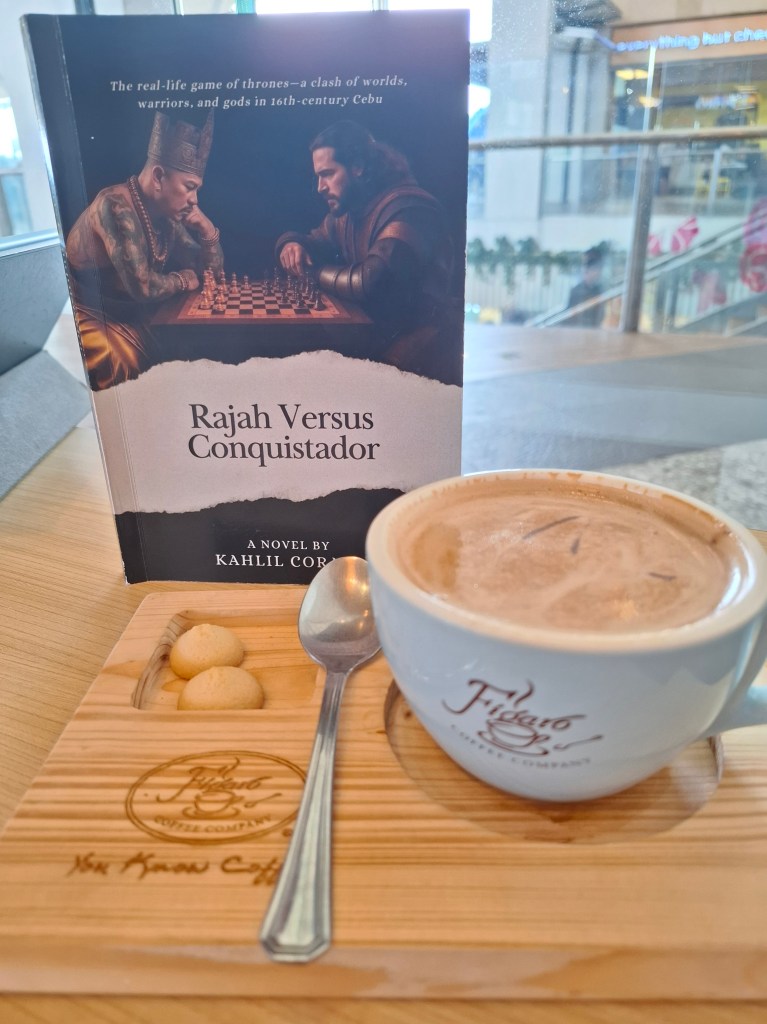
The book ends with one of the most satisfying – if violent – chapters of our history, and yet it goes beyond mere vengeance. Beware of underestimating the Filipino warrior, who may sheathe his blade to bid you welcome, eat his food and touch his women. In his veins flow Malay blood, the blood of warriors, with a flexible pride that can bear putting on the mask of a smile in order to bide time for the killing blow. There is a purpose to each display of obeisance, each declaration of war. For the thirst for power is a tale as old as time, and, as Corazo shows, only the players and the battlefield change with the seasons and the tide.
~ ~ ~ ~ ~ ~
[The reviewer received a copy of RAJAH VERSUS CONQUISTADOR for review. It is readily available for P499.00 from Lazada and on Amazon for $9.99 (Kindle)]
ABOUT THE REVIEWER:
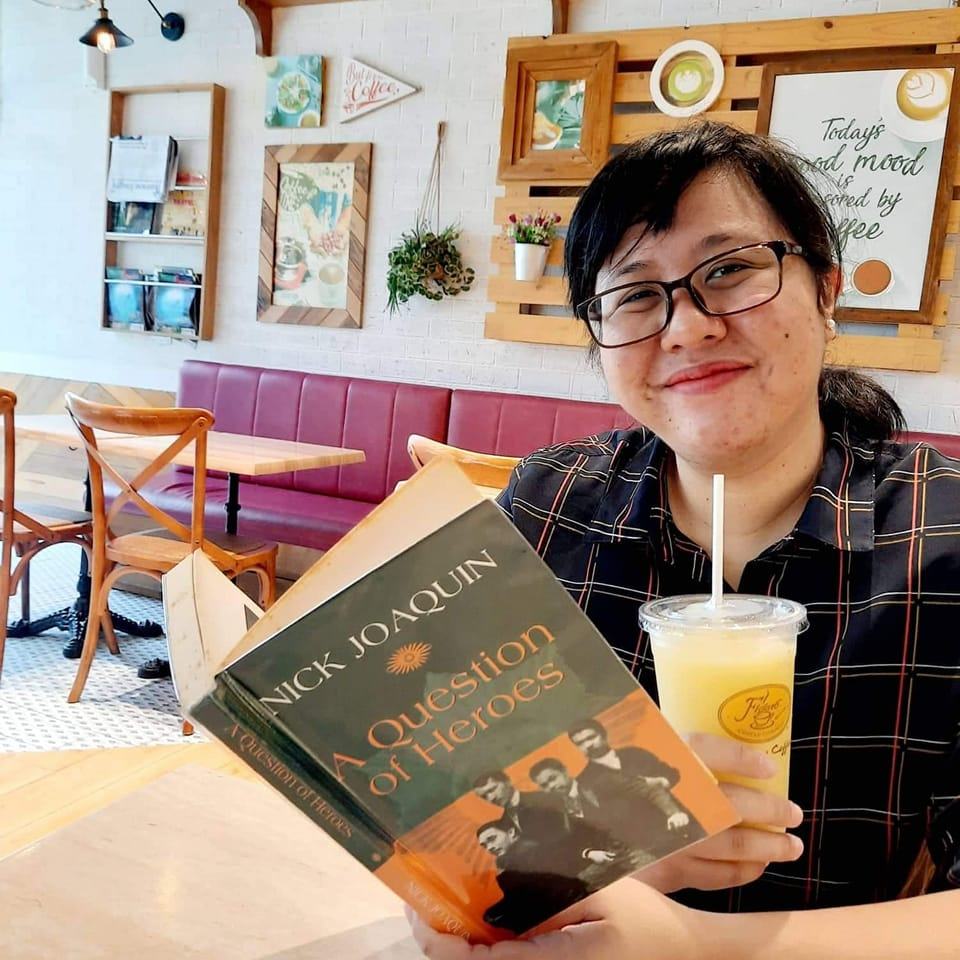
Gabi Francisco is a classically trained soprano who now performs in the English / Music / Drama classroom. On weekends she soaks in as much art and literature as she can, so she can pass her love for the arts on to her students. She passionately believes in the transformative role of arts education in nation-building. (IG: teacher.gabi.reads )
 Ex Libris Philippines
I agree with you. Kahlil’s writing is persuasive. I like the way the book is written. It made me want to read more historical fictions and I hope that it will have a similar writing style.
Great review, btw. 🙂
LikeLike
Always such a pleasure to read writing of this caliber! What a great time for Pinoy readers like us!
LikeLike